How to Monetise Your POV Street Photography Videos
It is 11pm on a Tuesday. You are back from a four-hour walk through the city with your Ray-Ban Meta glasses and your Fujifilm X100VI. You have 47 frames worth keeping and about an hour of POV footage that genuinely captures how you moved through those streets. You know it is good material. You just do not know what to do with it beyond posting a few shots on Instagram and watching them get 200 likes before the algorithm buries them.
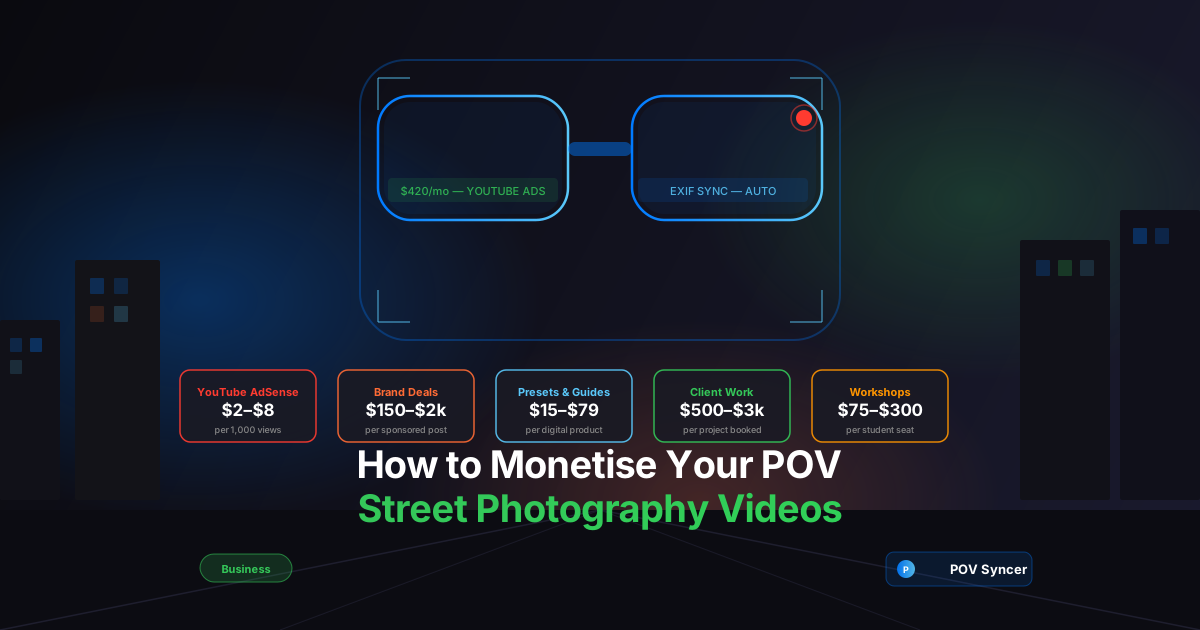
Here is what most street photographers do not realise: that footage and those photographs together are worth considerably more than the sum of their parts. Not in some vague, aspirational sense — in actual money, transferred to your account, from real people who genuinely value what you create. The photographers who figured this out first are now earning between $500 and $5,000 per month from content they were already producing anyway.
This is the guide I wish I had when I was still treating my street photography as a pure hobby. We will go from first video to first dollar, covering every revenue stream that works specifically for POV street photography content in 2026 — with realistic numbers, realistic timelines, and the specific tools that make it feasible without turning into a full-time content production operation.
Why POV Content Specifically Has Monetisation Leverage
Street photography has always had an audience. What has changed is the format. Static images compete in an environment of billions of photographs. Process video — footage that shows how a photographer moves, sees, decides, and shoots — competes in a much smaller pool. The photography audience on YouTube, Instagram, and TikTok is enormous and deeply underserved by authentic process content.
POV video is particularly powerful because it is genuinely impossible to fake. When you are watching someone's eye-level footage from Ray-Ban Meta glasses and a Ricoh GR IIIx photo appears at the exact moment the shutter fired, you are watching real decision-making in real time. That authenticity is the foundation of every monetisation path covered in this guide. It is what makes brands trust you, what makes students want to learn from you, and what makes clients believe you can deliver on a commission.
The practical problem has always been the editing grind. Manually scrubbing through an hour of glasses footage, locating each shot moment, placing photos on a timeline, matching audio — that is three to four hours of editing work per ten minutes of finished video. At that pace, producing enough content to build a monetisable audience is simply not viable alongside a full-time job.
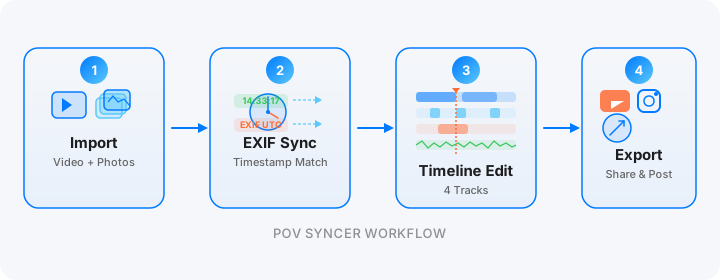
That is exactly what POV Syncer's automatic EXIF sync solves. Import your footage and photos, and the app reads the EXIF timestamp from every image file, matches each one to the precise frame in your video, and builds the timeline automatically in under 60 seconds. What took hours now takes minutes. The economics of content production change completely when you can turn around a finished video the same evening you shot it.
Get the free POV Photography Cheat Sheet
Camera settings, EXIF tips, and monetisation quick-reference for Ray-Ban Meta, GoPro, DJI, and Insta360 — all on one printable page. Join 1,000+ photographers getting weekly tips.
Free PDF, no spam. Unsubscribe anytime.
Revenue Stream 1: YouTube AdSense
What It Looks Like in Practice
YouTube is the most durable long-term monetisation platform for street photography process content. Long-form videos — ten to twenty minutes showing a full shooting session with narration — hold a photography audience's attention in a way that no other platform can match. And once a video is on YouTube, it continues earning for years, not the 48-hour window you get from Instagram.
To qualify for YouTube Partner Program (YPP) monetisation, you need 1,000 subscribers and 4,000 watch hours in the past 12 months. For a street photography channel posting consistent POV process content, those numbers are typically achievable in four to six months. The photography niche attracts a highly engaged audience who watch long videos fully — which means your watch hours accumulate faster than a channel in a less engaged niche.
Realistic Revenue Numbers
Photography content typically commands a CPM (cost per thousand views) of $3 to $8, reflecting the camera gear and software purchase intent of the audience. At 50,000 monthly views — achievable for a channel producing two to three videos per week — that translates to $150 to $400 per month in pure ad revenue.
That number sounds modest, but it compounds. At 200,000 monthly views, you are looking at $600 to $1,600 per month from ads alone, before brand deals or digital product sales are added. The key is volume: consistent output is the driver, and consistent output is only viable when individual video production time is measured in minutes rather than hours.
What Street POV Content Works on YouTube
The formats that perform best are session walkthroughs (following a single session from start to finish), gear comparison videos (shooting the same location with GoPro Hero 13 versus Ray-Ban Meta Gen 2 and showing the editing difference), location essays (a specific street, market, or neighbourhood seen through a photographer's eyes), and technique breakdowns (how to shoot in low light with a Leica Q3 and still get usable POV footage).
Each of these formats maps directly to what POV Syncer produces. The automatic EXIF sync, AI-powered narration via the Voice track, and 15 premium font options for title cards give you everything needed to produce professional-looking content from raw footage without opening a desktop editor.
Revenue Stream 2: Instagram Brand Partnerships
Why Street Photography Attracts Brands
Camera brands, bag and accessory manufacturers, travel companies, and lifestyle brands have a genuine interest in authentic street photography content. The key word is authentic — brands have seen enough staged flat-lay photography to last a lifetime. A POV video that shows a working photographer carrying their Peak Design bag through Shoreditch or using their Sony A7C II in available light in Tokyo is exactly the kind of content those brands need for their own social channels.
At 10,000 to 50,000 Instagram followers, you are in the micro-influencer tier. Sponsored posts in this range typically command $150 to $800 per piece of content, depending on your niche authority and engagement rate. Street photography audiences tend to skew toward high-engagement demographics — people who are actively considering gear purchases — which means your engagement rate often exceeds accounts with larger but less focused audiences.
Approaching Brands Professionally
Your POV process videos are your strongest pitch asset. Before reaching out to any brand, compile three to five of your best finished videos — the ones that show your full workflow from walking the streets to finished photographs. These demonstrate not just your photography, but your production quality, your audience relationship, and your ability to showcase a product in a credible, non-promotional context.
Cold outreach to smaller brands via Instagram DM has a reasonable conversion rate in the photography space. Focus on brands whose products you already use and genuinely recommend. Authenticity is not just a marketing buzzword here — experienced photographers' audiences can immediately detect a forced partnership, and a misaligned sponsorship will damage your credibility far more than it will earn you.
Long-Term Brand Relationships
The most valuable brand partnerships are multi-video arrangements rather than one-off posts. A camera bag company paying for a three-video series — each one featuring the bag in a different city — is worth considerably more than three separate $200 posts, and takes less pitch effort per dollar earned. Position your POV format as a unique offering: a brand integration that appears in an authentic process video is fundamentally different from a traditional sponsored post, and should be priced accordingly.
Revenue Stream 3: Selling Presets, Guides, and Digital Products
The Passive Income Layer
Digital products are the highest-margin revenue stream available to a photography content creator. Once created, a Lightroom preset pack or a PDF shooting guide costs nothing to fulfil. Every sale is nearly pure profit. A street photography preset pack built around the Fujifilm X100VI Classic Chrome film simulation — packaged with a short process video showing how to use it — can realistically sell for $25 to $49 and generate consistent passive income once the audience is established.
The most effective way to sell digital products as a street photographer is through your process videos themselves. When your Fujifilm colour science appears on screen during a POV walkthrough and viewers ask about your editing in the comments, that is the natural sell point for a preset pack. The product recommendation feels like advice from a trusted source rather than a sales pitch, because that is exactly what it is.
Products That Work for Street Photography
Lightroom and Capture One preset packs are the obvious entry point, but they are also the most competitive. The higher-margin products are more specific: a location guide for a specific city that includes shooting maps, timing advice, and gear recommendations; a video course on zone focusing and street shooting technique; or a template pack for POV video titles in POV Syncer, designed around specific camera aesthetics.
A complete street photographer digital product bundle — presets, location guide, and technique PDF — priced at $79 is a realistic offering once you have an audience of 5,000 to 10,000 engaged followers. Ten sales per month is $790 in passive income, earned while you are out shooting. That number scales with audience size without additional work on your part.
Download POV Syncer Free — Create Your First Video in 60 SecondsRevenue Stream 4: Client Acquisition Through Process Videos
Your Portfolio Is Not Enough
Every commercial photographer, event photographer, and wedding photographer faces the same problem: a portfolio of beautiful images tells a client what your results look like, but nothing about what it is like to work with you. Clients commissioning photography are not just buying images — they are buying a person, a process, and a guarantee that the shoot will go smoothly even if conditions are not ideal.
A POV process video of a street shooting session is the most powerful client acquisition tool a photographer can produce. It shows potential clients exactly how you operate: how you move through a space, how quickly you identify shots, how decisive you are, and how the final images emerge from what looks like natural, unpressured movement. For a client considering you for an editorial commission, a brand campaign, or a documentary project, watching ten minutes of your process video is more convincing than seeing a hundred portfolio images.
Real Revenue Potential
A single commercial photography commission landed through content marketing typically earns between $500 and $5,000 depending on the client and usage rights. Even one client acquisition per month from your process video content represents a substantial income layer on top of everything else. Two or three clients per month from your video portfolio is a full-time income.
The photographers who use process videos most effectively for client acquisition treat each video as a specific pitch: a street session in a specific neighbourhood, shot with specific camera gear, demonstrating a specific aesthetic. A Leica Q3 street photography walkthrough in central London demonstrates a very different capability than a GoPro Hero 13 documentary-style shoot at a market. Build a library of process videos that shows range, and every commercial brief that comes your way will find a video in your catalogue that speaks directly to it.
The DJI Action 4 and 5 Pro Advantage for Client Work
For client-facing process documentation, the DJI Action 5 Pro offers a particularly compelling option. Its 4K footage quality, magnetic mounting system, and superior image stabilisation produce a level of production finish that is immediately recognisable as professional. When you are creating a process video intended to land a commercial commission, the investment in higher-quality footage is justified. POV Syncer handles the DJI Action 5 Pro's EXIF data with the same automatic sync as any other supported camera.
Revenue Stream 5: Teaching, Workshops, and Photography Walks
Your Process Is the Curriculum
If you have been consistently documenting your street photography sessions with POV video, you have inadvertently built a teaching curriculum. Every session is a lesson: why you chose that location, how you handled the light, the shots that worked and the ones that did not, what you would do differently. The material is already there. The workshop is just the structured, live version of the content you are already creating.
Photography walking workshops — two to four hour guided sessions in a city neighbourhood — typically charge $75 to $200 per participant. With four to eight participants per walk, a single weekend workshop generates $300 to $1,600. The barrier to entry is low: you need a location you know well, a structured approach to what you teach, and the credibility that comes from having documented your process publicly on video.
Online Teaching Scales Better
For photographers in smaller cities or those without the time to run regular in-person workshops, an online course built around your POV process videos is a more scalable option. A six-week email course on street photography — with one process video per week and supplementary notes — priced at $99 can run without any additional time investment once created. POV Syncer's AI narration feature means you can add professional voiceover to each video without recording commentary in a quiet room, which dramatically lowers the production barrier for online course content.
Live Online Sessions
Monthly live Q&A sessions or virtual street walks — broadcast from your phone while wearing Ray-Ban Meta glasses, with POV footage streaming directly — have emerged as a compelling format for building a paid community. Platforms like Patreon and Substack let you monetise a subscriber community directly. At $10 per month with 100 paying subscribers, that is $1,000 per month from people who already trust you and want more access to your process.
Want camera combo settings for 20+ setups?
Join 1,000+ photographers getting weekly tips — including our free cheat sheets for every major POV and street camera combination. Ray-Ban Meta, GoPro, DJI, Insta360 paired with Fujifilm, Leica, Ricoh, Sony, and more.
Free PDF, no spam. Unsubscribe anytime.
Revenue Stream 6: Affiliate Revenue and the POV Syncer Opportunity
Camera Gear Affiliate Commissions
Affiliate marketing is often dismissed as a minor income stream, but for photography content creators it is structurally different from most niches. The products you recommend — cameras, lenses, POV cameras, memory cards, bags, editing software — have high purchase prices and meaningful commission rates. The Fujifilm X100VI costs upward of $1,600. A Ray-Ban Meta Gen 2 is $329. A GoPro Hero 13 is $399. At 3 to 8 percent commission through Amazon Associates or manufacturer affiliate programs, a single camera recommendation that converts is worth $10 to $130.
At realistic conversion rates for an engaged photography audience, ten to twenty affiliate commissions per month from camera and gear links in your video descriptions is entirely achievable. At an average of $40 per conversion, that is $400 to $800 in additional monthly income from links you would be sharing anyway in your video descriptions.
The POV Syncer Affiliate Program
POV Syncer's affiliate program offers photographers a commission on every Pro subscription that comes through their referral link. Given that POV Syncer is the specific tool that makes consistent POV content production viable in the first place, the referral fits naturally into any process video where you discuss your workflow. There is no awkward product mention — you are recommending the app you are demonstrably using, to an audience of photographers who are watching the output it helped you create.
The compounding effect here is meaningful. Every photographer in your audience who downloads POV Syncer through your link and upgrades to Pro generates a recurring commission. At $9.99 per month Pro subscriptions and 50 active referrals, that is a growing passive income stream that builds alongside your audience rather than requiring constant new content to sustain it. POV Syncer Pro is $9.99/month or $99.99/year — both tiers qualify for affiliate commissions.
The Step-by-Step Path from First Video to First Dollar
Month 1: Build the Foundation
Shoot two to three sessions per week with your POV camera and street camera. Use POV Syncer to produce finished process videos — aim for ten to fifteen minutes of edited footage per session. Post to both YouTube (full-length) and Instagram (a 60-90 second Reel cut). Do not worry about monetisation yet. You are building the catalogue and learning what your audience responds to.
Get the technical baseline right: sync your camera clocks before every session, shoot in a format that produces strong EXIF data (RAW plus JPEG on any Fujifilm, Sony, or Canon), and give your POV camera enough charge to run for the full session. The one-tap photo matching in POV Syncer handles the rest automatically.
Month 2 to 3: Build the Audience
At a cadence of two to three videos per week, you should begin to see consistent growth in both YouTube subscribers and Instagram followers. Start placing affiliate links in video descriptions for the gear you use. Sign up for Amazon Associates and any manufacturer affiliate programmes relevant to your cameras. This revenue will be small at first — $30 to $100 per month — but it establishes the habit of monetising your content from day one.
Begin working on a first digital product. A preset pack based on your own editing style, priced at $19 to $29 with a simple Gumroad or Patreon storefront, is the lowest-friction entry point. Mention it in one video per week. Your first sale — however small — is a significant psychological and practical milestone.
Month 4 to 6: Activate the Revenue Streams
With four to six months of consistent content behind you, you are approaching YouTube Partner Programme eligibility and have an Instagram audience with genuine engagement. This is the point to make your first brand outreach — two to three carefully chosen companies whose products you already feature in your videos. A single successful brand partnership at this stage, even at $150 to $300, validates the approach and builds confidence for larger negotiations.
If you have run even one street photography walk informally — showing a friend the neighbourhood you shoot in, explaining how you approach scenes — you already have a workshop. Formalise it. Set a date, price it at $80 to $120 per person, promote it in two video descriptions, and see what converts. The overhead is zero. The upside is real.
Month 6 and Beyond: Compound the Results
The photographers who reach a meaningful monthly income from street photography content all describe the same experience: the first $500 month feels impossible until suddenly it is not. Then the first $1,000 month feels like a ceiling until it is not. The compounding effect of consistent content, growing audience, improving skills, and multiple revenue streams working simultaneously is not dramatic — it is steady and persistent, like the city changing one frame at a time through your viewfinder.
At six months of consistent production, a realistic revenue breakdown might look like: YouTube AdSense $200–$600, affiliate commissions $100–$300, digital products $200–$500, one brand deal per month $150–$400, workshop or online session $150–$400. Total: $800 to $2,200 per month, from content you were already motivated to create. Twelve months in, those numbers roughly double.
The Role of Production Speed in Making This Sustainable
Every revenue stream described above requires consistent content output. Consistent output is only sustainable when production does not feel like a second full-time job. The hours of manual editing grind — scrubbing through footage, tedious timeline placement, manually matching each photo to its moment in the video — is the reason most photographers abandon content creation before the audience is large enough to earn from.
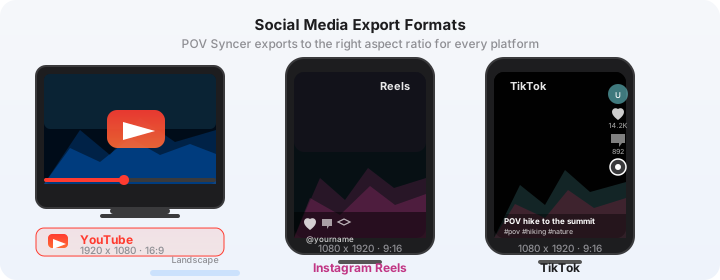
Automatic EXIF sync through POV Syncer eliminates that grind. Import your footage and photos, and the app matches every image to its precise video frame using the timestamp in the EXIF data. The timeline builds itself in under 60 seconds. Add AI narration and title cards, export in the format you need, and you are done. What took three to four hours of manual editing now takes fifteen to twenty minutes, including the time to write a short script for the voice track.
That two to three hours recovered per video, multiplied by two to three videos per week, is six to nine hours per week returned to either shooting more content or living your life. It is the difference between content creation feeling like a burden and feeling like an extension of the photography practice you were already engaged in. For a monetisation strategy that depends on volume and consistency, that difference is not marginal — it is foundational.
See the full feature set and pricing comparison to understand what the free tier covers and when the Pro upgrade pays for itself in time saved.
Start building your POV photography income today
Download POV Syncer free and produce your first monetisable process video tonight — no manual editing, no timeline scrubbing, no editing grind.
Free app, no credit card. Pro from $9.99/month. Unsubscribe anytime.